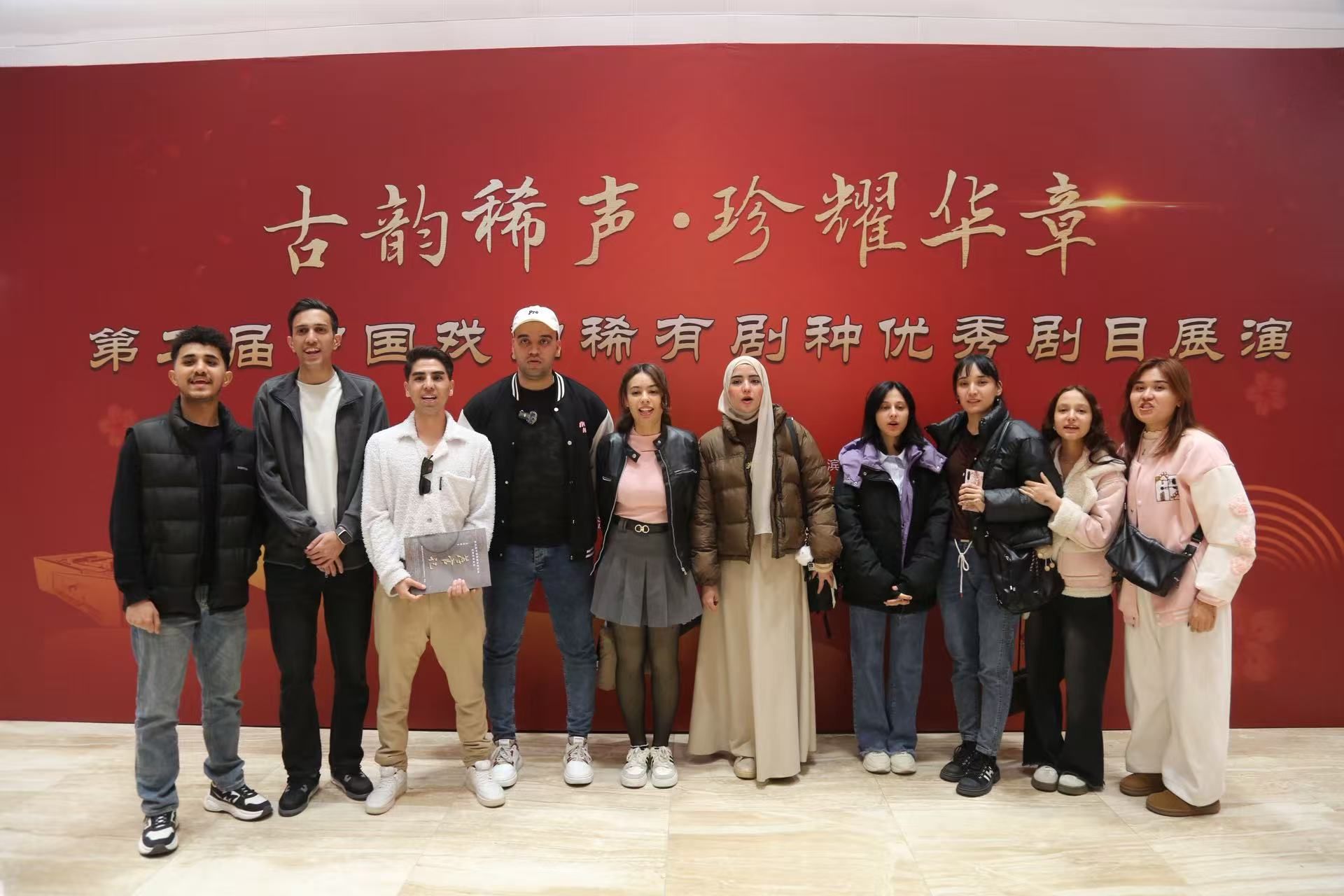
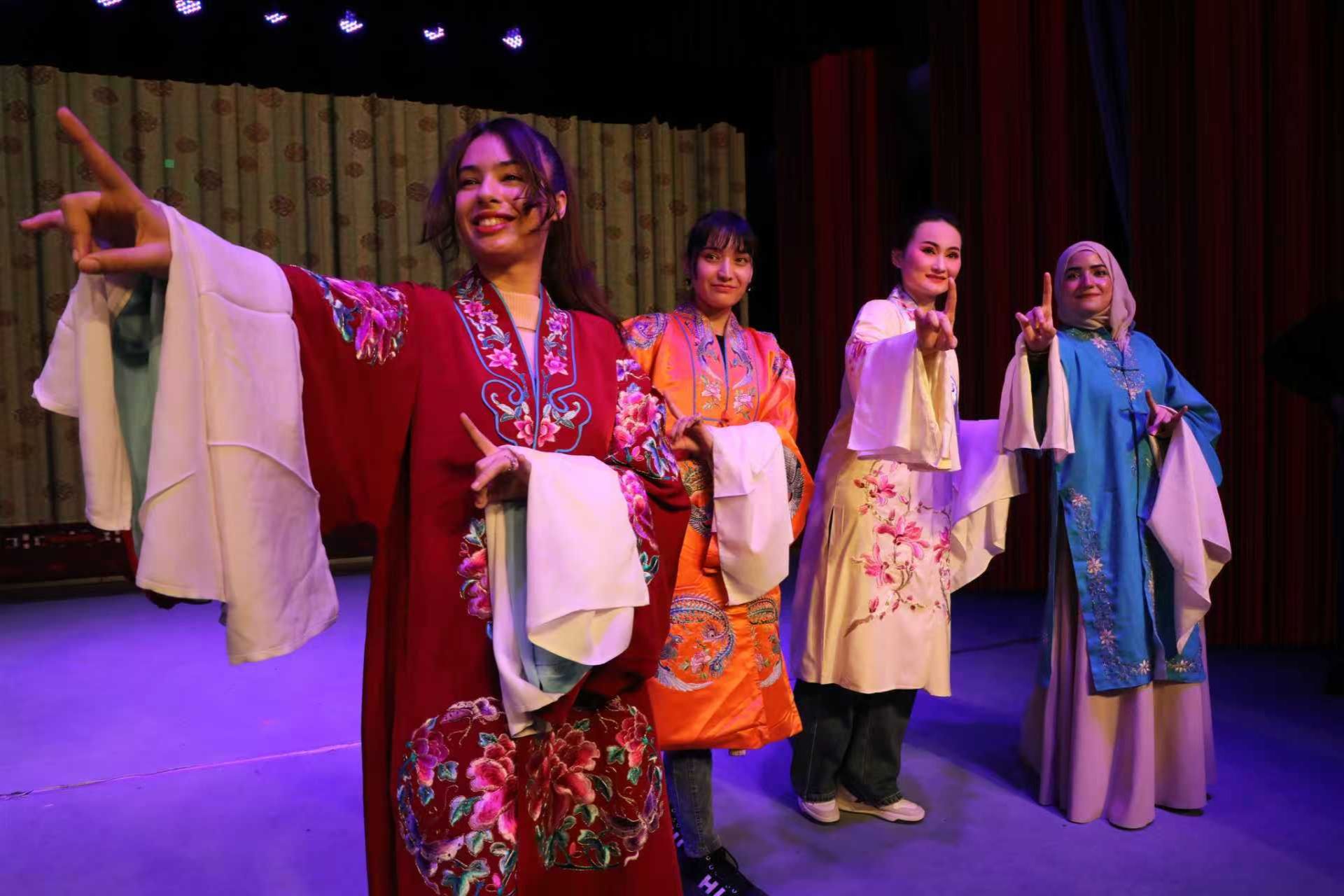
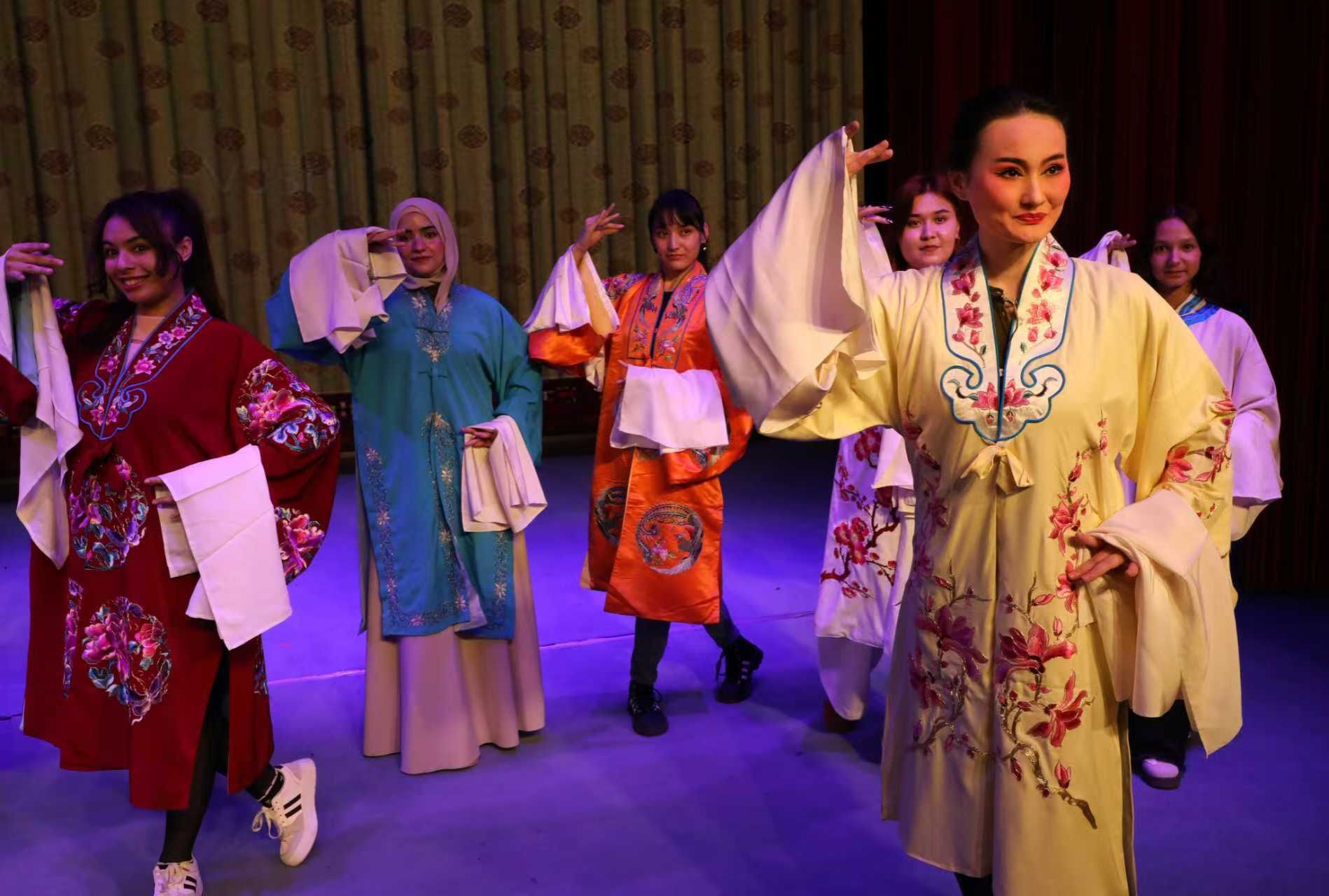
On the afternoon of March 23, ten international students from our college, accompanied by three teachers, visited the Boxing County Opera Troupe to attend the closing ceremony of the 2nd National Exhibition of Excellent Rare Opera Genres and immerse themselves in the charm of Lüju opera.
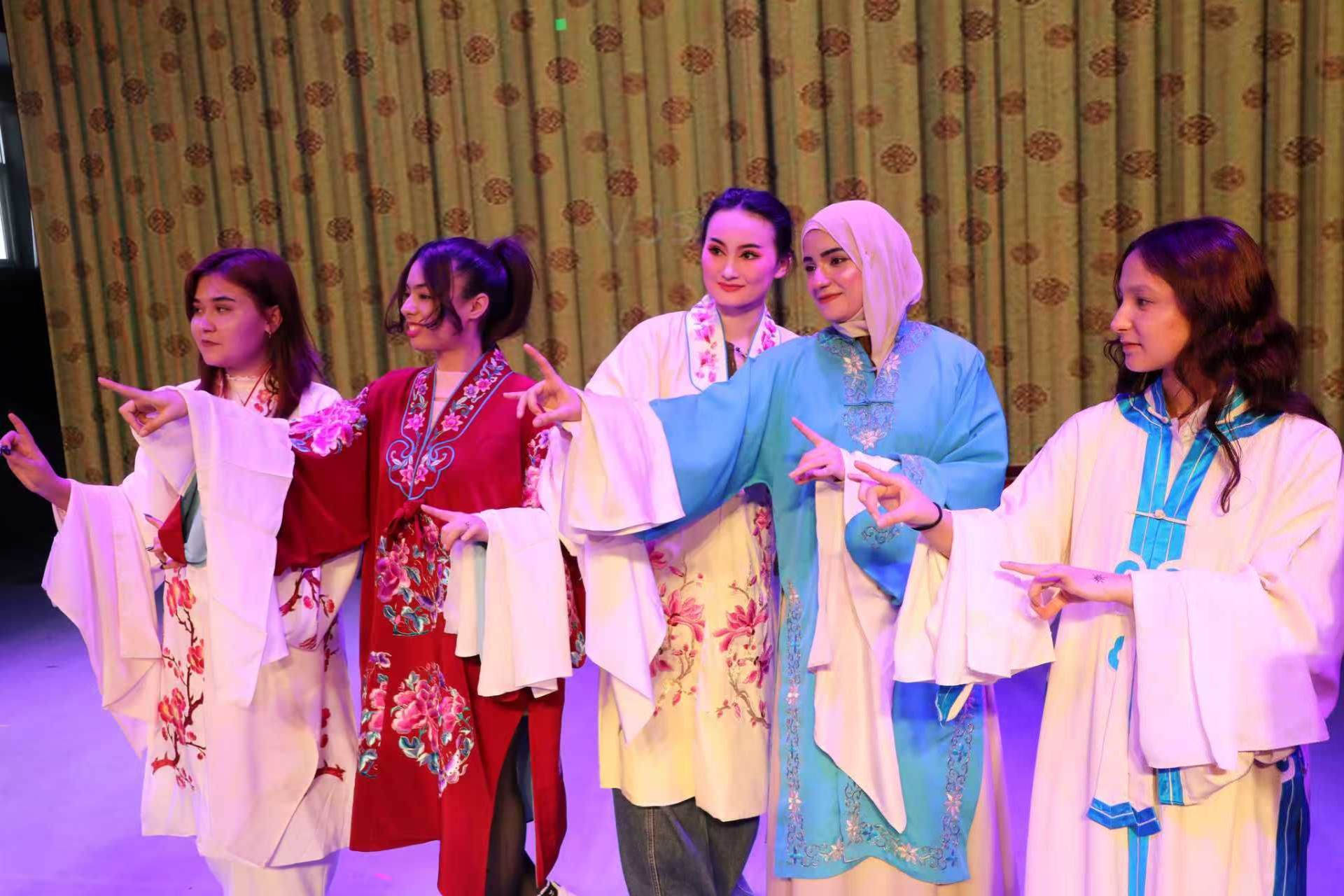
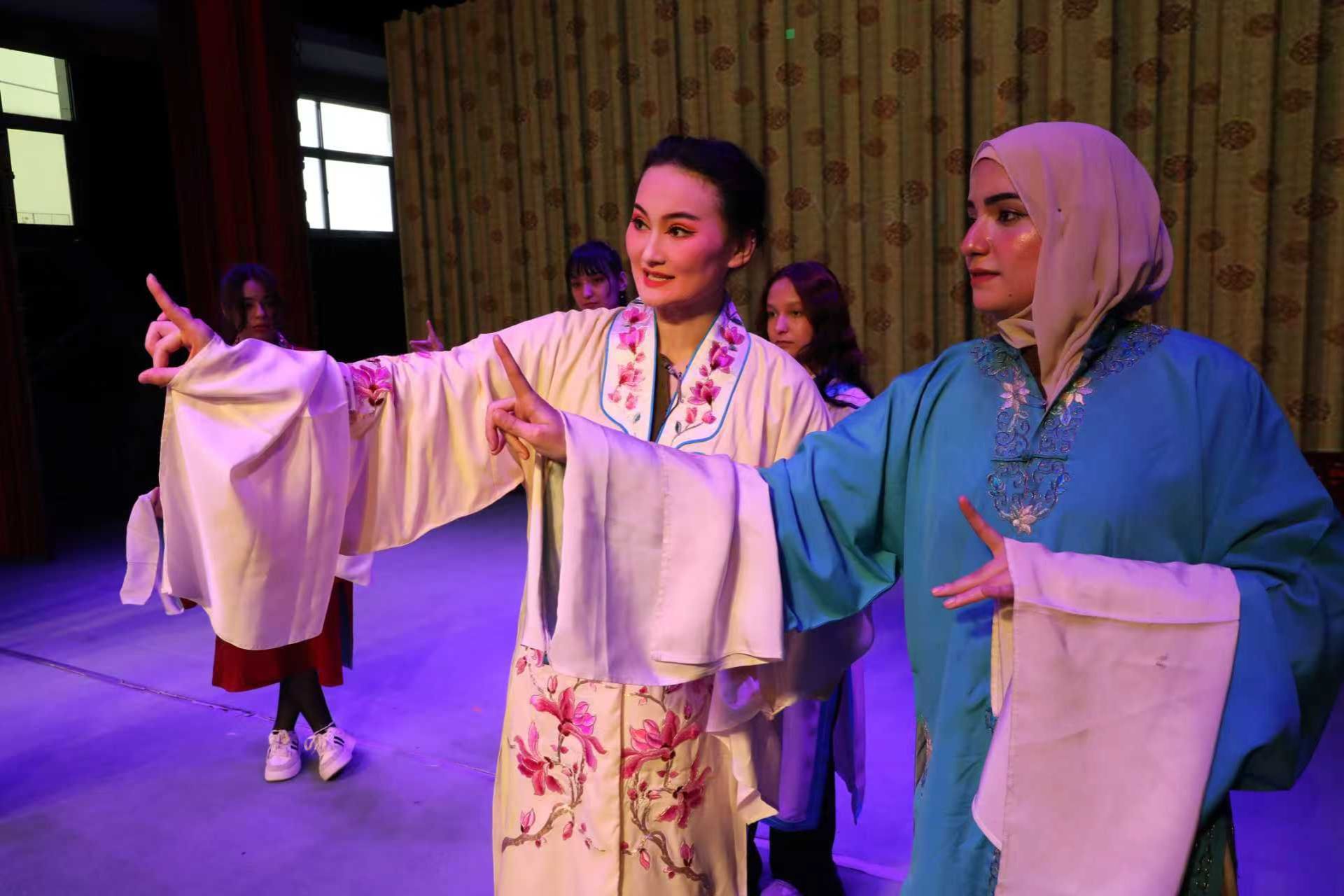
At the costume experience area, the students put on traditional opera costumes and learned basic stage movements. Malik from Yemen, while adjusting the long water sleeves, smiled and said, “I feel like I’ve traveled back in time to an ancient Chinese stage!”
At the closing ceremony, a newly compiled large-scale historical play of the Eastern Road Bangzi genre, “A Recommendation for an Official,” was performed as an outstanding representative of local opera. Wu Yuan from Afghanistan remarked, “Although I couldn’t understand the lyrics, I could feel the emotion—so sincere and powerful.”
Lüju Opera – One of China’s Eight Major Opera Genres, National Intangible Cultural Heritage
Lüju originated in Lüyi Town, Boxing County, Binzhou, Shandong Province, with a history of approximately 150 years.
1. Historical Origins
In the late 19th century, folk artists in Boxing developed “costumed yangqin” performance based on local folk tunes and qinshu storytelling – the predecessor of Lüju. Artists represented by Sun Zhongxin brought this rustic local art form to village fairs and markets. After generations of传承, Lüju spread from Binzhou across the country. Lüyi Town, Boxing County, was awarded the title “Hometown of Chinese Lüju Art.”
2. Artistic Features
Lüju singing follows the banqiang (rhythmic) system. The Sipingqiang tune is melodious and graceful, while the Erban is bright and lively. The overall style is simple and smooth. The main accompanying instruments are the zhuiqin, yangqin, sanxian, and pipa – known as the “Four Major Instruments.” Classic Lüju pieces include The Virtuous Younger Sister-in-Law and Borrowing the New Year. The modern opera Li Ersao Remarries is regarded as a milestone in Lüju history.
3. Preservation and Transmission
In 2008, Lüju was inscribed on the National List of Intangible Cultural Heritage. Binzhou City has issued special protection regulations, promoting the living transmission of Lüju through six dimensions including talent cultivation, communication, and integration with cultural tourism. Each year, Binzhou presents over 400 performances of Lüju in rural areas and schools.
Rooted in Binzhou, Lüju resonates far and wide. In the future, our college will continue to use culture as a bridge, enabling more international students to become storytellers of Binzhou and ambassadors of Chinese culture, helping this art flower – with the fragrance of the Yellow River soil – cross mountains and seas to connect the world.

 search content