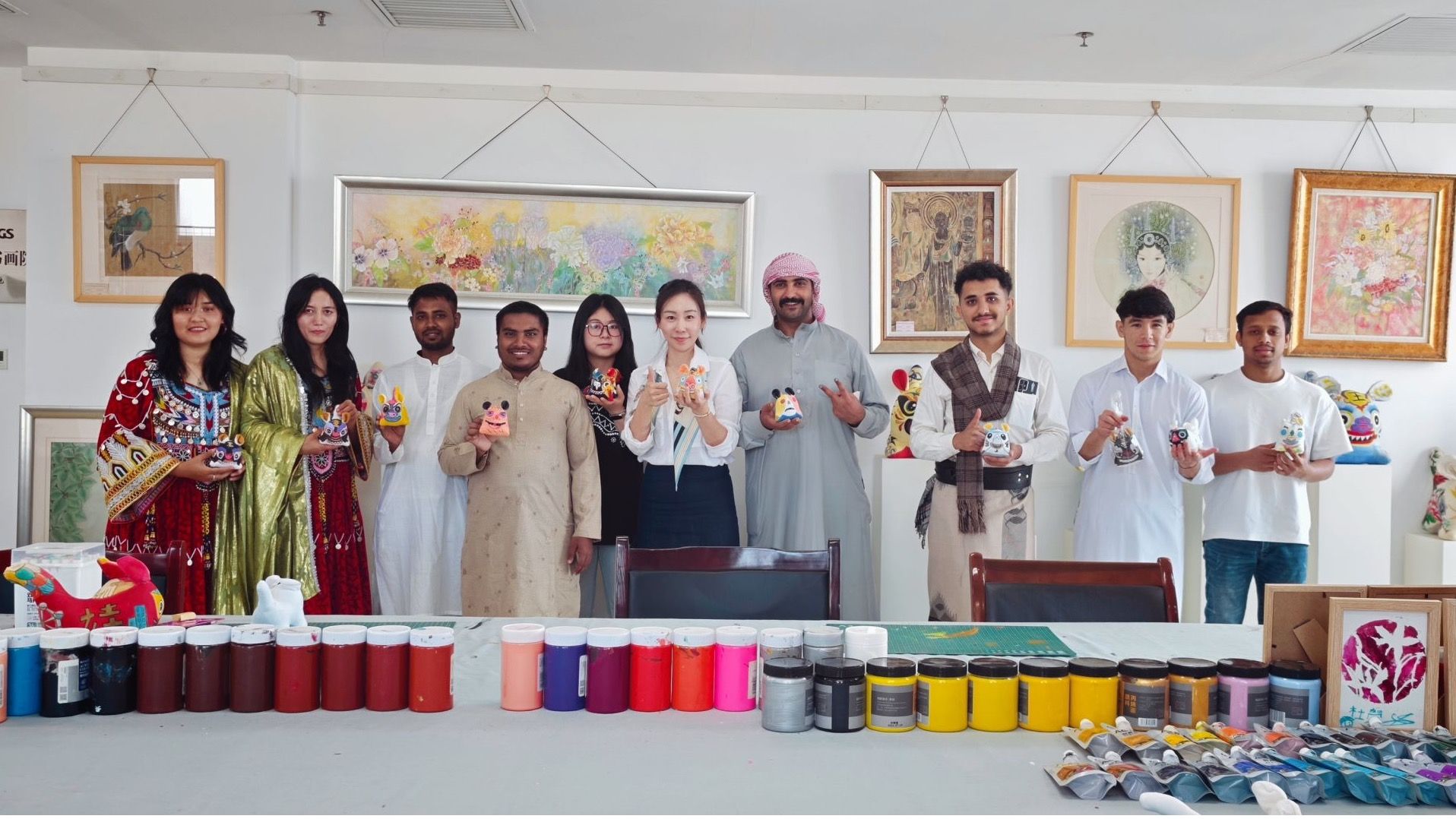
The cloth tiger is a treasure of traditional Chinese folk handicraft, serving as a plaything, an ornament, a gift, and a collectible all in one. In 2008, it was inscribed on China's National List of Intangible Cultural Heritage. Originating from ancient totems and embodying the nation's memories and blessings through every stitch, it has now found a new role in the classrooms of Binzhou Polytechnic University, bridging hearts and sparking meaningful dialogue between Chinese and international youth.
I. Tiger Through the Ages: From Totem to Auspicious Symbol
The cloth tiger has its roots deeply embedded in the ancient worship of tiger totems. Our ancestors regarded the fierce tiger as a protective spirit, and folk beliefs also held that "even a tiger does not devour its own cubs," reflecting the creature's maternal and protective nature. Thus, the tiger became a spiritual symbol of warding off evil, bringing good fortune, and ensuring safety. The double-headed tiger pillow is the most classic form, symbolizing the harmony of yin and yang and the protection of children. Additionally, the Chinese word for tiger (虎, hǔ) sounds similar to the word for blessing (福, fú), giving the cloth tiger a connotation of bestowing blessings and safeguarding the home. A cloth tiger is more than a handicraft—it is a condensed history of folk beliefs, carrying the deep emotional ties of the Chinese people to life and home.
II. Heartfelt Craftsmanship: China's Colors in Simplicity
The making of cloth tigers is entirely handcrafted, involving fabric selection, cutting, stitching, stuffing, and decoration—each step reflecting the artisan's skill and dedication. The forms are exaggerated yet charmingly natural—big round eyes, prominent mouths, and sturdy, compact bodies, combining rustic simplicity with a hint of fierce vitality. The colors are predominantly bright reds, yellows, and greens, evoking the warmth and excitement of traditional festivities. Without fixed templates, each cloth tiger is one of a kind. Artisans, often skilled women in the countryside, stitch their blessings and imagination into every piece, ensuring that this craft not only preserves ancient techniques but also remains vibrant and alive.
III. A Binzhou Polytechnic Invitation: A Dialogue of Civilizations in the Intangible Cultural Heritage Classroom
Located along the banks of the Yellow River, Binzhou has a long-standing tradition of cloth tiger craftsmanship. Binzhou Polytechnic University has incorporated this art form into its intangible cultural heritage courses for international students. Young people from various countries come together to sew, paint, and experience the warmth and wisdom of Chinese folk culture through each stitch. The university also involves international students in cultural exchange events, using cloth tigers as a medium to showcase local culture and promote mutual understanding between China and the world. From an ancient totem to a vehicle for contemporary creativity, what international students participate in is not just a handicraft class, but a dialogue between civilizations that transcends time and space. The preservation of intangible cultural heritage depends on maintaining its essence while embracing innovation; the mutual learning among civilizations thrives through educational exchange. The work being done at Binzhou Polytechnic University serves as a vivid testament to cultural continuity and the convergence of world cultures.

 search content