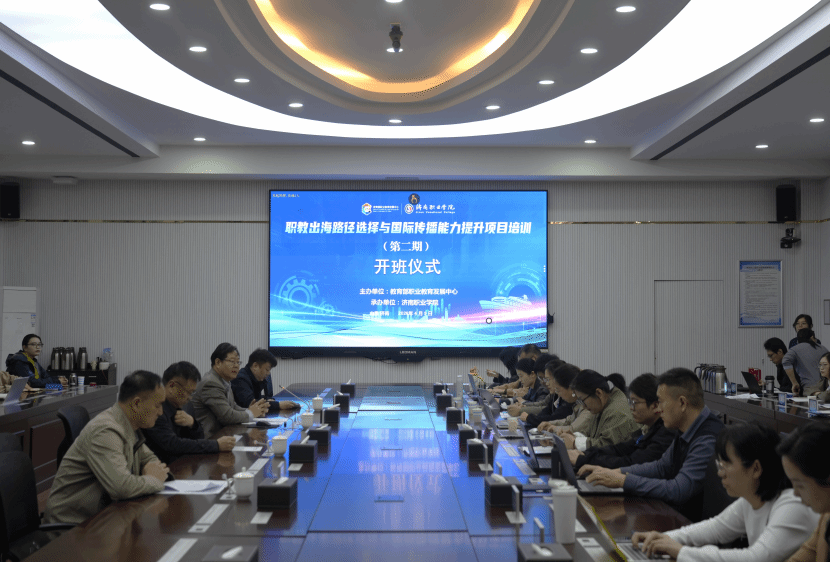
From April 8 to 11, the “Specialized Training Program on Pathways for Vocational Education Going Global and Enhancing International Communication Capabilities (Phase II),” organized by the Ministry of Education’s Vocational Education Development Center and hosted by Jinan Vocational College, was held in Jinan. Li Yudi, Secretary of the Party General Branch of our university’s International College, was invited to deliver a keynote lecture, sharing Binzhou Vocational College’s experience in “vocational education going global” with peers from vocational colleges across the country.
Centered on the theme “Strategic Guidance and Practical Breakthroughs: Building Systematic Capabilities for Vocational Colleges to ‘Go Global,’” the training program brought together university-level leaders in charge of international exchange, heads of international affairs offices, and academic leaders from vocational colleges across the country to jointly explore new trends and pathways for vocational education’s global expansion.
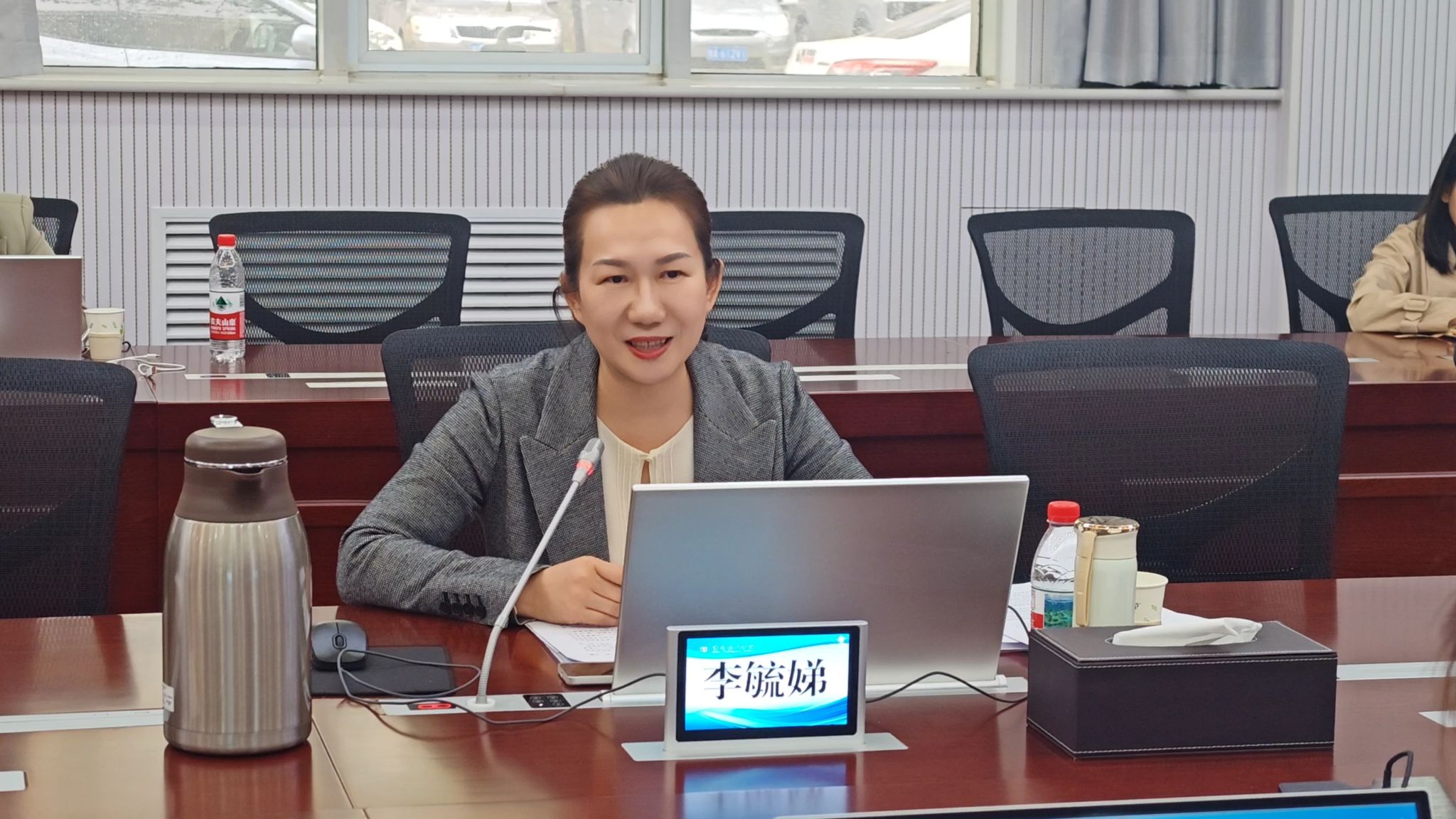
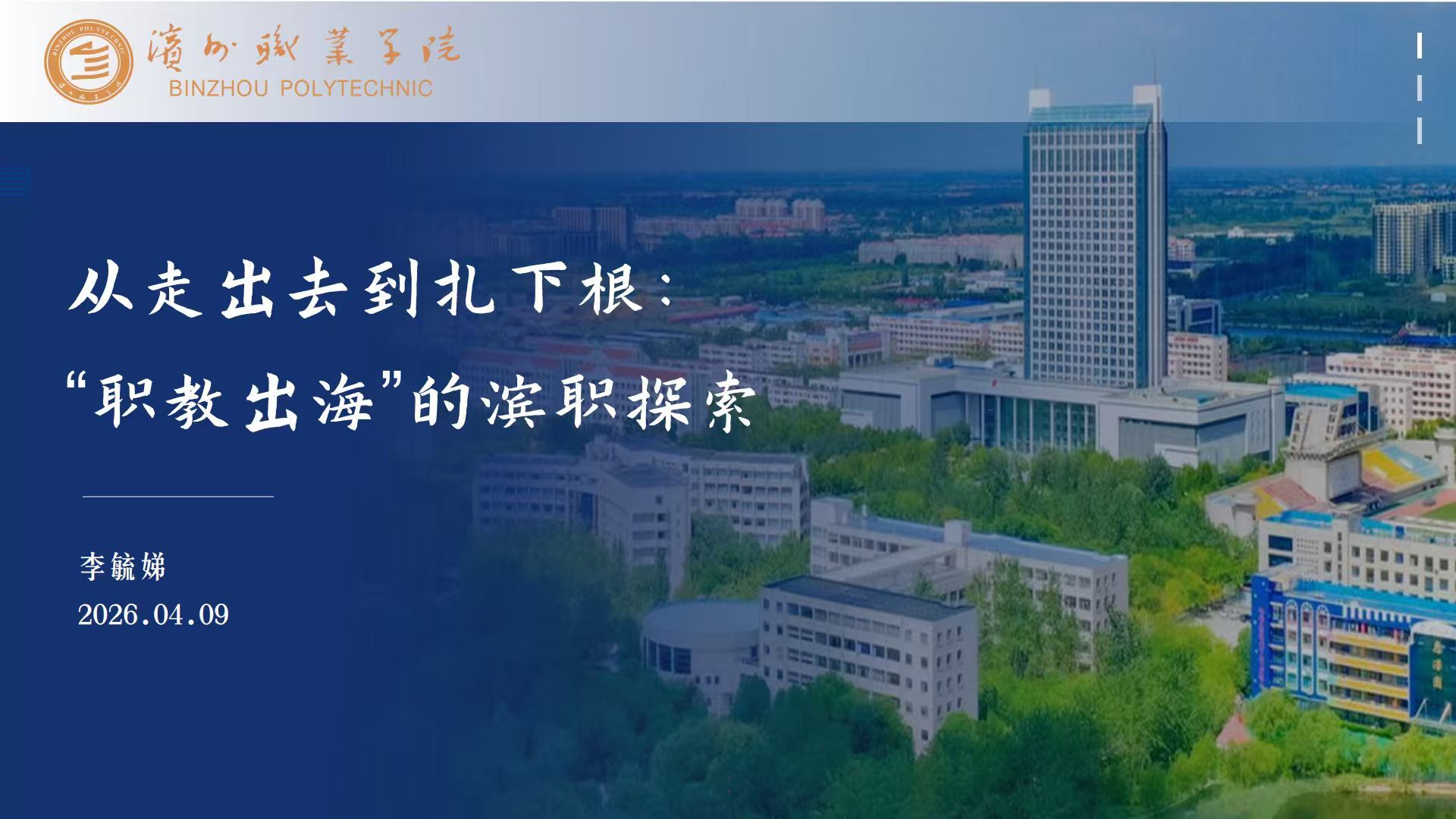
In her presentation titled “From ‘Going Global’ to ‘Taking Root’: Binzhou Vocational College’s Exploration of ‘Going Global’ in Vocational Education,” Li Yudi, grounded in the broader national strategic context, systematically reviewed the policy evolution and historical mission of vocational education’s “going global” initiative. She conducted an in-depth analysis of the current development trends and primary models of “going global” in vocational education, and highlighted three representative practices of our college in countries such as Guinea and Morocco: the “Ban Mo Academy“—skills training and standardization, the Morocco branch campus—academic education and system co-construction, and the ”Sun Wu Academy“—cultural outreach and digital empowerment. These three cases represent distinct internationalization pathways, collectively forming a three-dimensional system comprising ”skills training + academic education + cultural exchange." The lecture directly addressed the common challenges currently facing the “going global” of vocational education, proposing “seven hurdles” and “seven paths.” From seven dimensions—precise planning, school-enterprise integration, standard-led development, cultural dissemination, brand building, educational level, and digital empowerment—it systematically elaborated on how to transition from “going out” to “taking root” and achieve steady and far-reaching progress. The lecture content received high praise from attending peers.
In recent years, our university has achieved systematic and landmark accomplishments in the field of vocational education going global. As the lead institution in establishing the China-Guinea Higher Institute of Engineering and Technology, we operate four overseas “Ban-Mo Academies” and a branch campus in Morocco; we have spearheaded the development of six vocational standards for African nations, promoting the integration of Chinese vocational education standards into local systems; and we have created the “Sun Wu Academy” online platform, establishing a new flexible model for going global characterized by “culture first, digital empowerment.” These initiatives have established the “Binzhou Pathway”—a replicable and scalable model—offering a vivid example of how vocational education with Chinese characteristics can “go global.”
Being invited to deliver a special lecture on a national-level training platform fully demonstrates the high recognition of our university’s educational capabilities and internationalization achievements by national authorities. It also serves as strong evidence of our university’s growing influence following its successful upgrade to a bachelor’s-level vocational and technical university. Taking this as a new starting point, the university will continue to deepen the principle of “education following industry needs and university-enterprise collaboration,” focusing on resolving key challenges such as university-enterprise integration, standard-driven development, and faculty development. We aim to build a vocational education brand with international influence and contribute more “Binzhou Vocational College strength” to serving the “Belt and Road” Initiative and the strategy to build China into an education powerhouse.

 search content