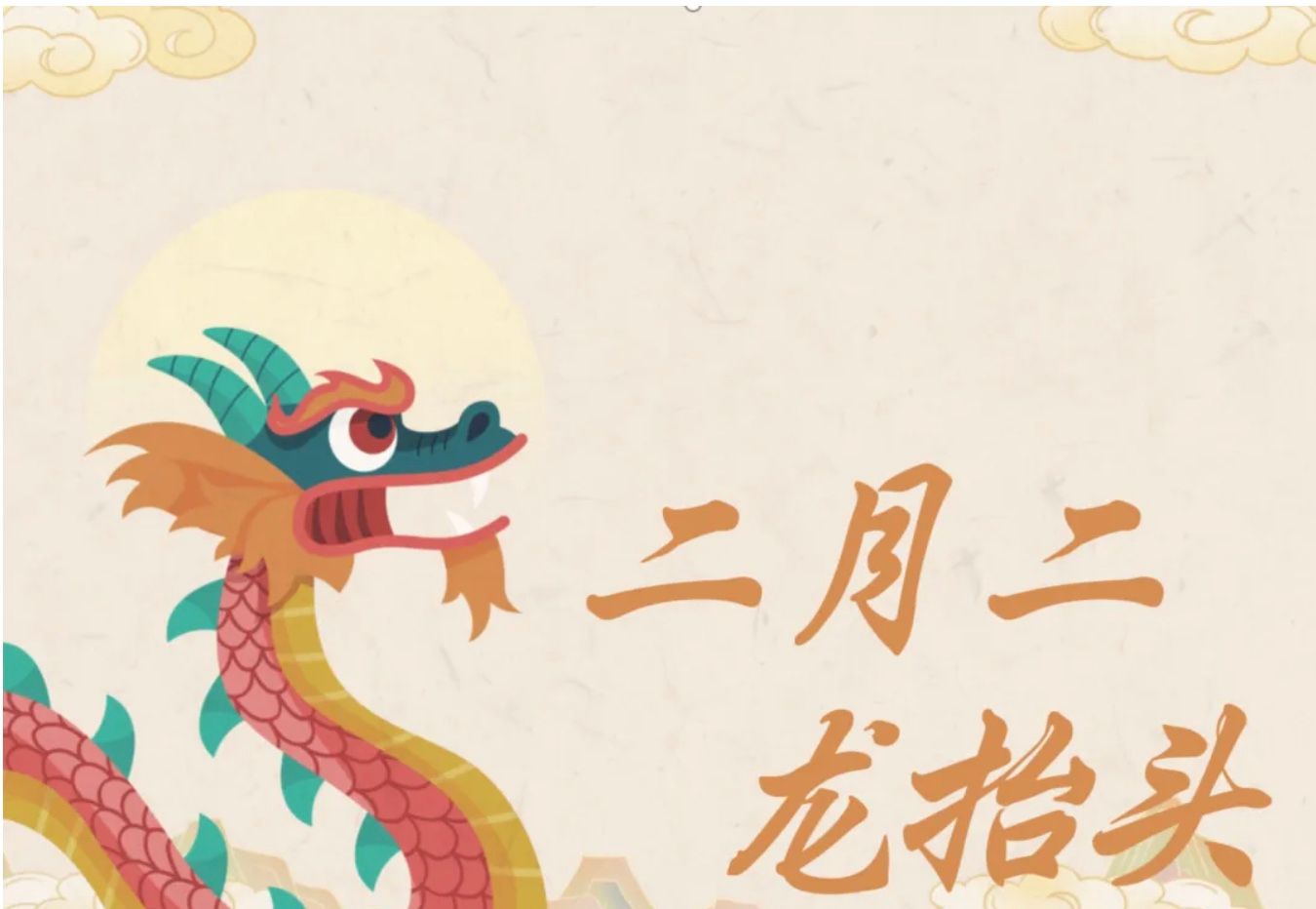
On the second day of the second lunar month, the Dragon Raises Its Head—also known as the Spring Dragon Festival, the Spring Plowing Festival, or the Farming Festival. It is a traditional Chinese folk holiday that falls on this day each year. At this time, yang energy begins to rise, rainfall increases, and all things come back to life, marking the start of spring plowing. People traditionally honor the dragon and pray for rain, drive away insects, and seek good fortune, wishing for favorable weather and a bountiful harvest.
Legend has it that the Azure Dragon constellation rises in the southern sky at dusk, signaling the awakening of the rain‑governing dragon, and thus the arrival of spring rains. The ancients would offer sacrifices to the dragon and pray for rain, hoping for timely rains and abundant crops. The saying "Spring rain is as precious as oil" reflects this deep‑seated hope, which is embedded in every ritual performed to honor the dragon.
Since the Qing Dynasty, the custom of "shaving the dragon's head" has become widespread. For children, a first haircut is believed to bless them with a smooth and successful growth; for adults, shaving off the old hair signifies casting away the troubles of the past year, symbolizing good luck and a refreshed spirit.
Foods on this day are all associated with the dragon:
Eating spring pancakes is called "eating dragon scales."
Eating noodles is called "eating dragon whiskers."
Eating wontons is called "eating dragon eyes."
Eating dumplings is called "eating dragon ears."
When noodles and wontons are cooked together, it is called "the dragon holding a pearl."
Eating scallion pancakes is called "tearing the dragon skin."

 search content