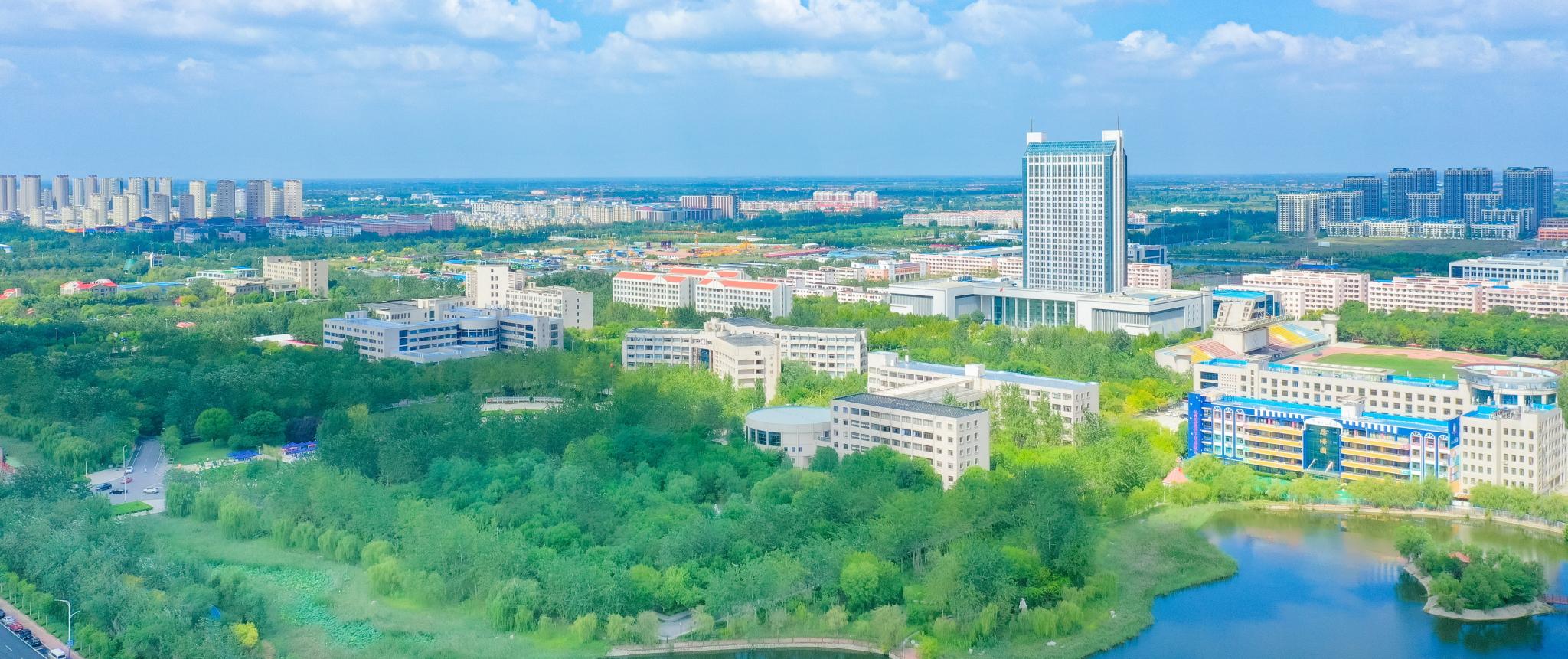
Recently, Abdoulaye Banire Diallo, General Coordinator of the Science and Innovation City under Guinea's Ministry of Higher Education, Scientific Research, and Innovation; Su Mingming, Deputy General Manager of the Human Resources Department at Chinalco; and Hao Mengzhen, Project Lead of the Education and Training Division at the Nonferrous Metals Industry Talent Center, visited Binzhou Vocational College for an exchange. The delegation was received by Liu Jinyi, Secretary of the College Party Committee; Shen Baozhong, Deputy Secretary of the Party Committee and President; and Hu Hongtao, Member of the Party Committee and President of Binzhou Institute of Applied Science and Technology.
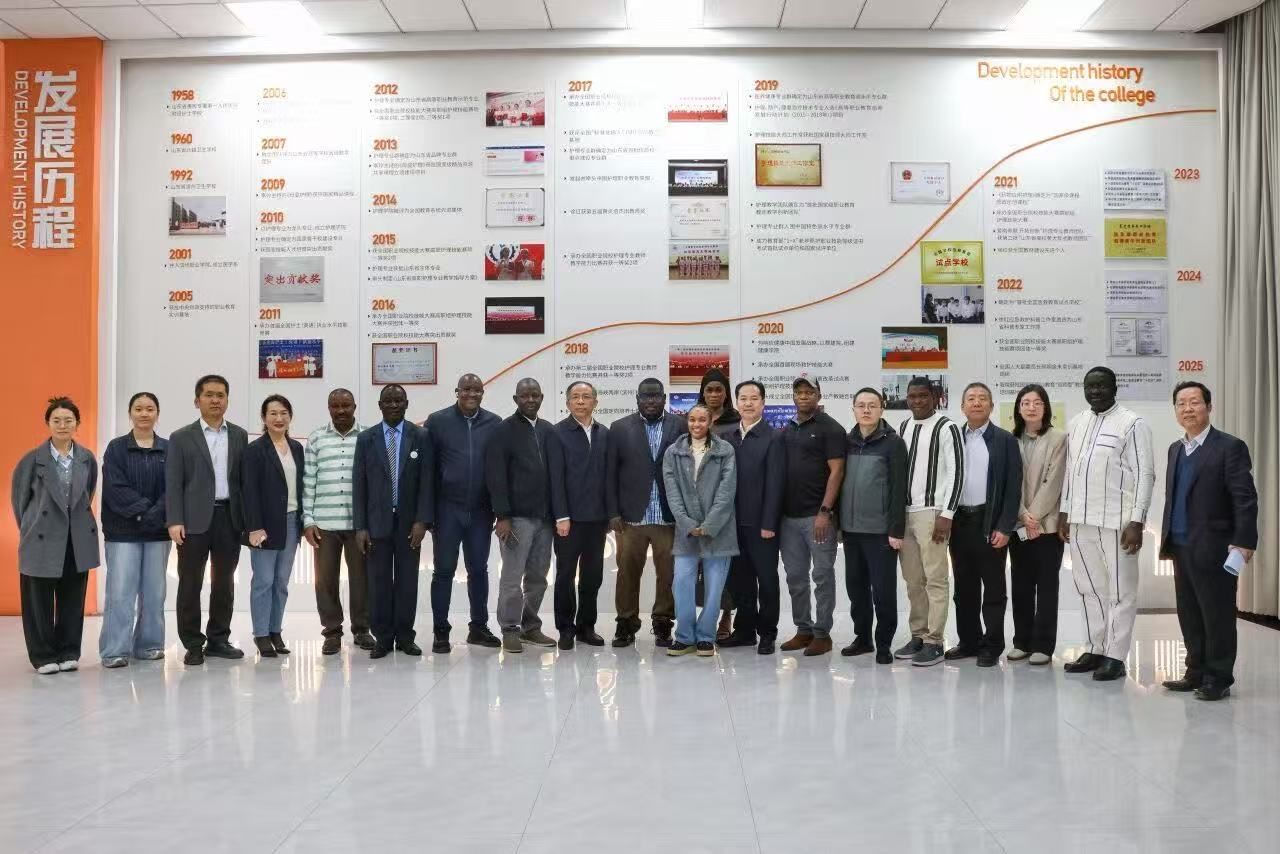
The delegation toured the school's history museum and training base, conducting on-site inspections of educational facilities including the Advanced Control Technology Engineering Center, Advanced Manufacturing Technology Engineering Center, Maritime Simulator Training Lab, Smart Learning Factory for Prefabricated Buildings, and Rehabilitation Therapy Training Lab. During the tour, they engaged in cordial exchanges with faculty and students, personally experienced various training facilities, and gained in-depth insights into the training base's operational model, industry-academia collaboration frameworks, and practical teaching achievements. They expressed high praise for the institution's advanced training facilities and comprehensive teaching system.
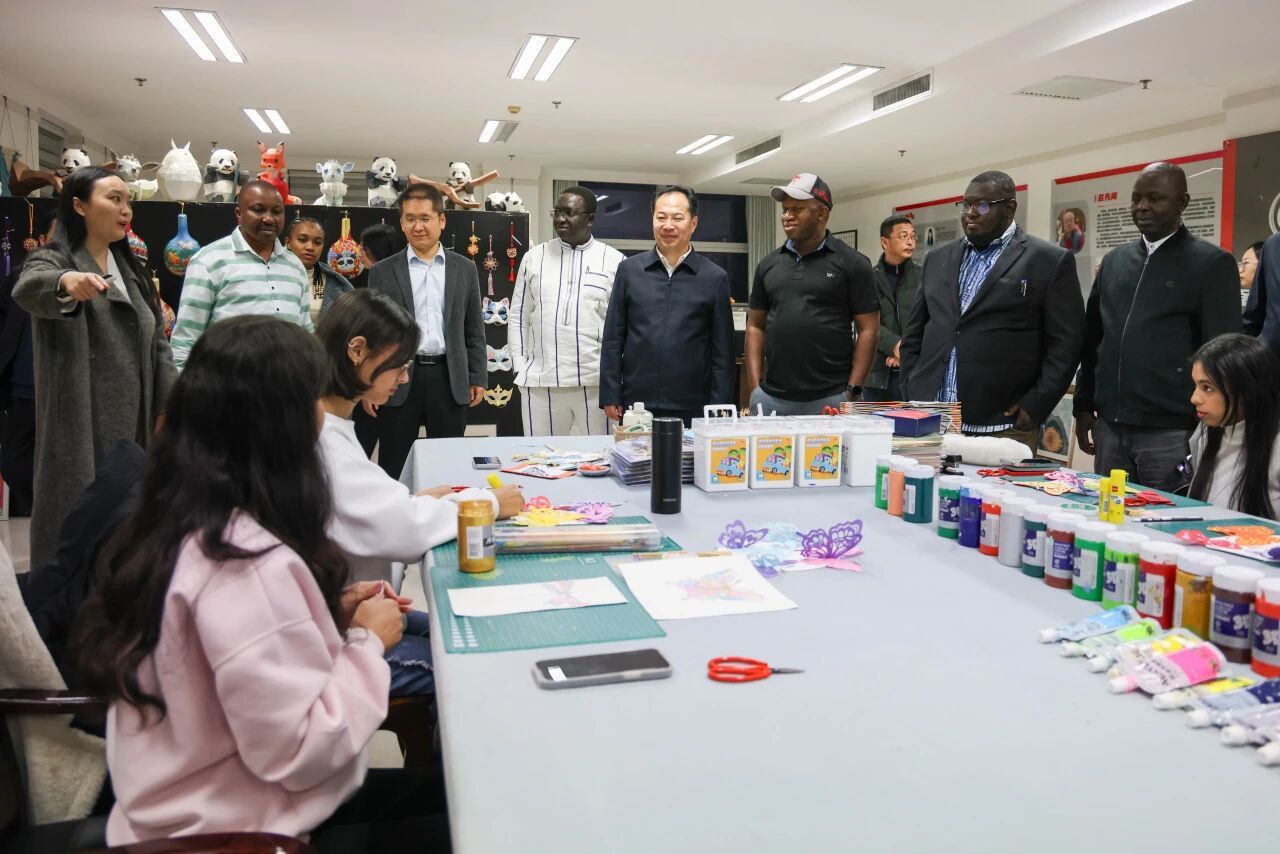
At the Binzhou Modern Original Art Research Institute, the delegation observed an intangible cultural heritage craft class for international students. The Guinean guests showed keen interest in Chinese paper-cutting art and engaged warmly with students from various countries.
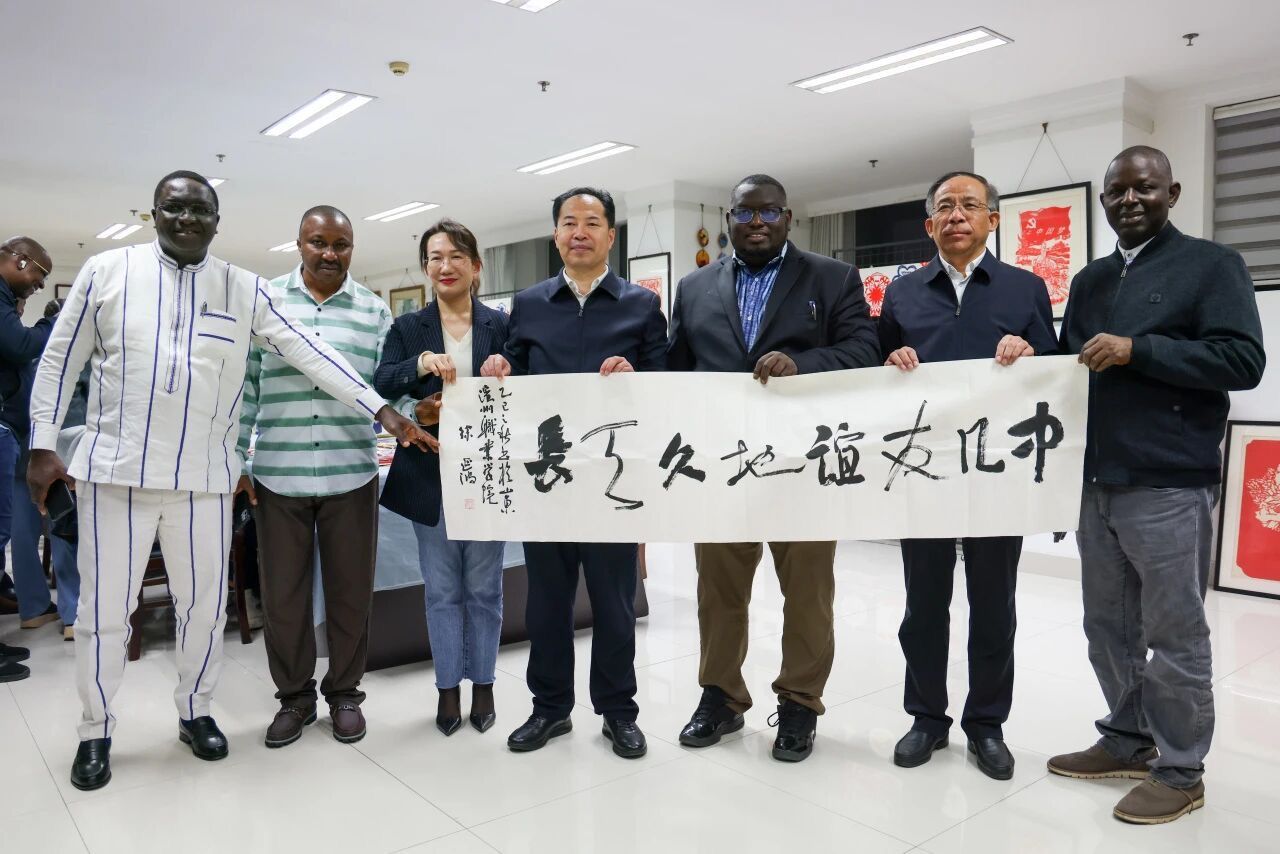
Following the tour, the school presented calligraphy works to the Guinean guests.
This exchange event fully showcased Binzhou Vocational College's achievements in vocational education and internationalization, laying a solid foundation for deepening cooperation between the college and Guinea's higher education sector, as well as with Chinese enterprises in areas such as overseas engineering technology college development and talent cultivation. Moving forward, the college will continue leveraging its educational strengths to deepen industry-education integration. By collaborating with domestic and international partners, it will jointly explore new pathways for the internationalization of vocational education, actively support the national Belt and Road Initiative, and continuously advance high-quality development in foreign economic cooperation and cultural exchange.

 search content